Andrew Beck | Tomorrow’s Sun
31.01.26 - 27.02.26

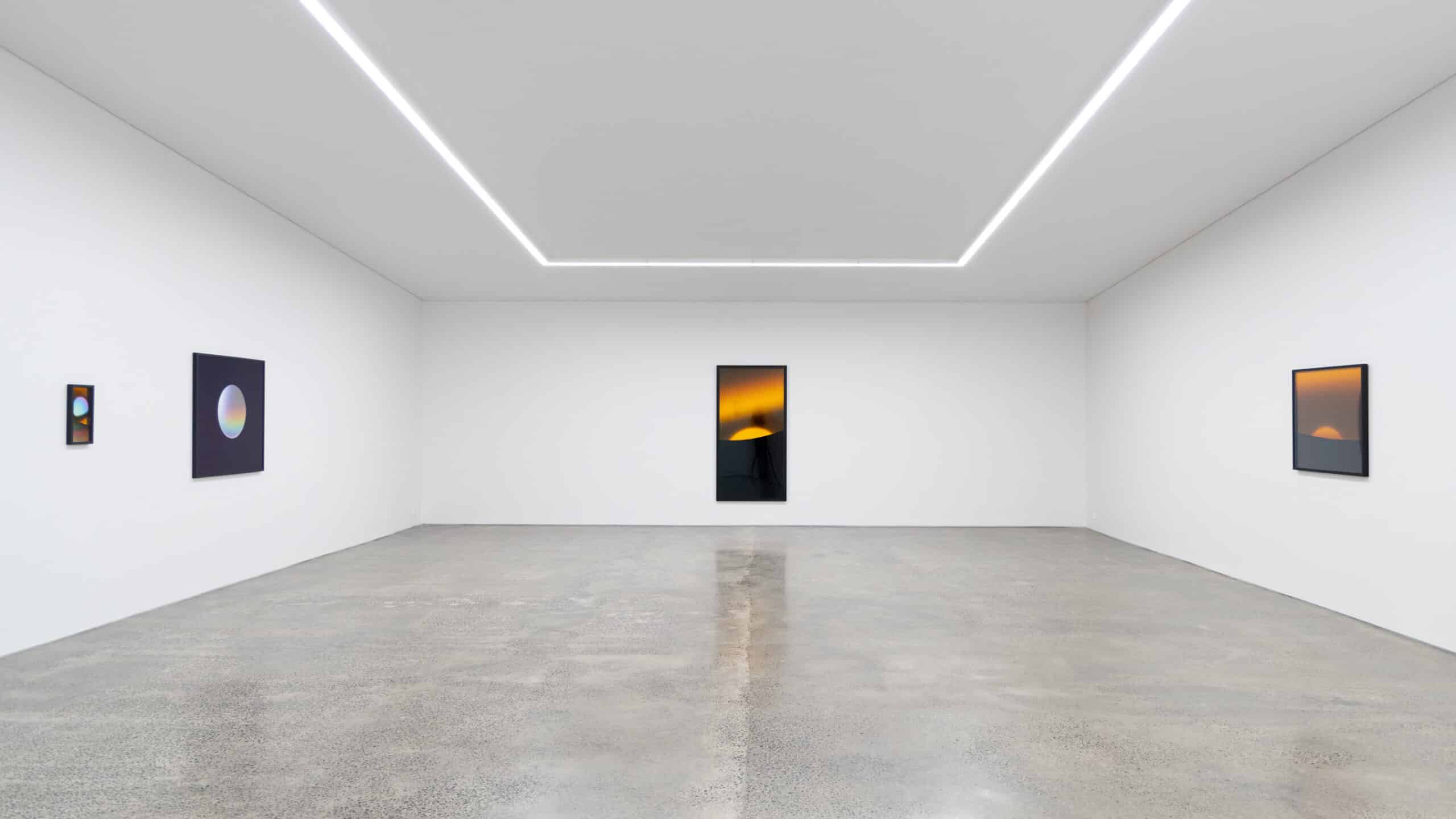
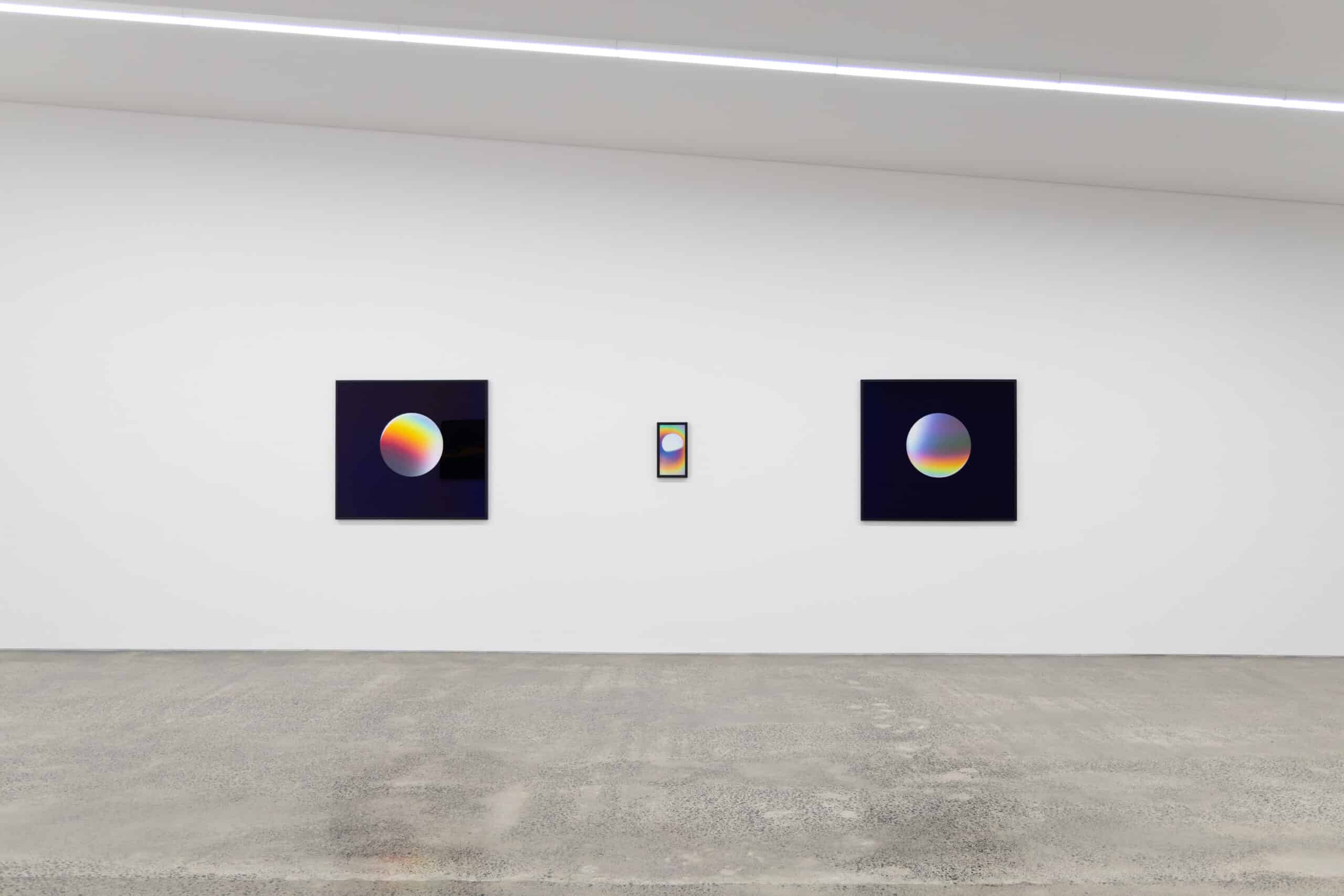
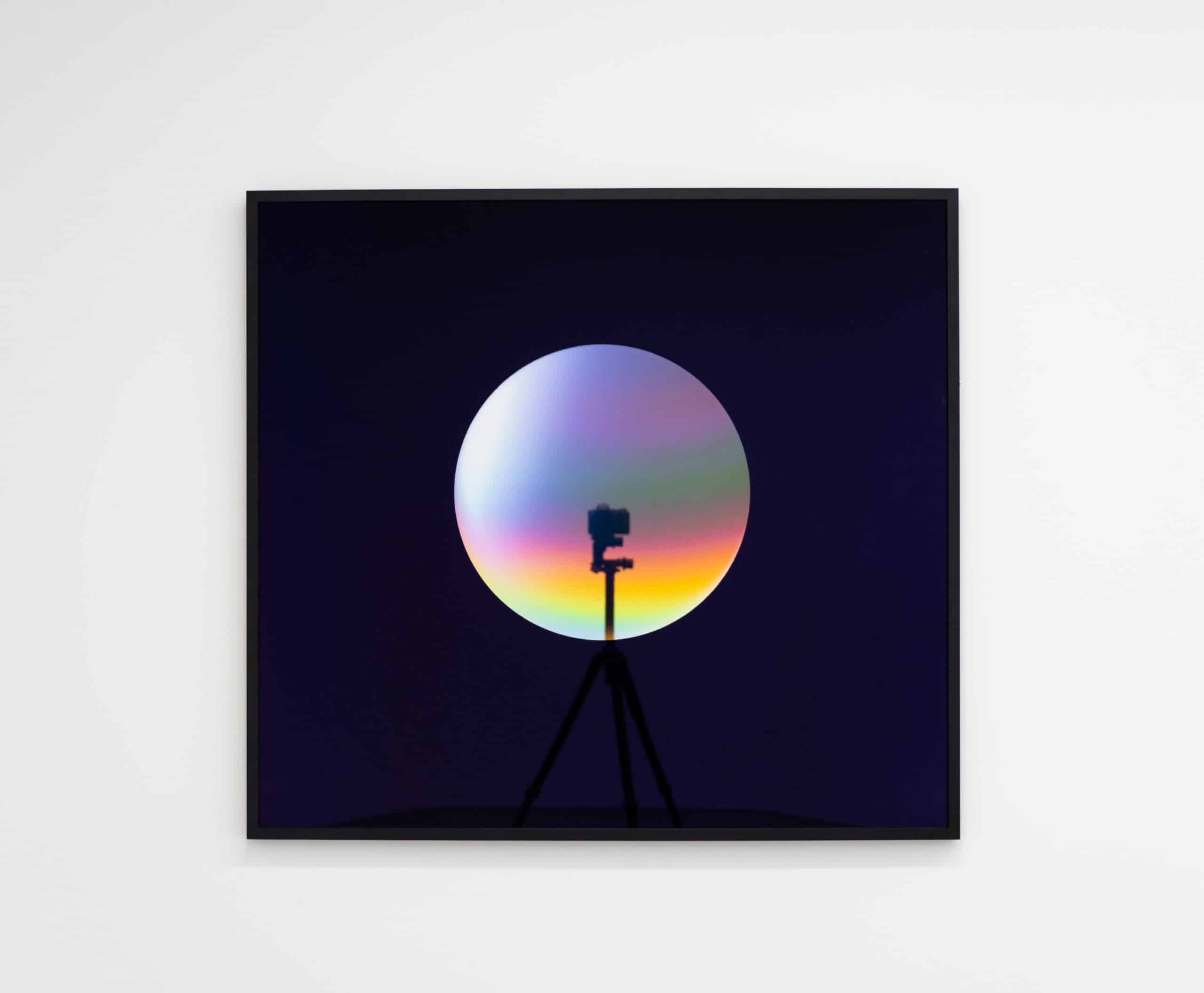


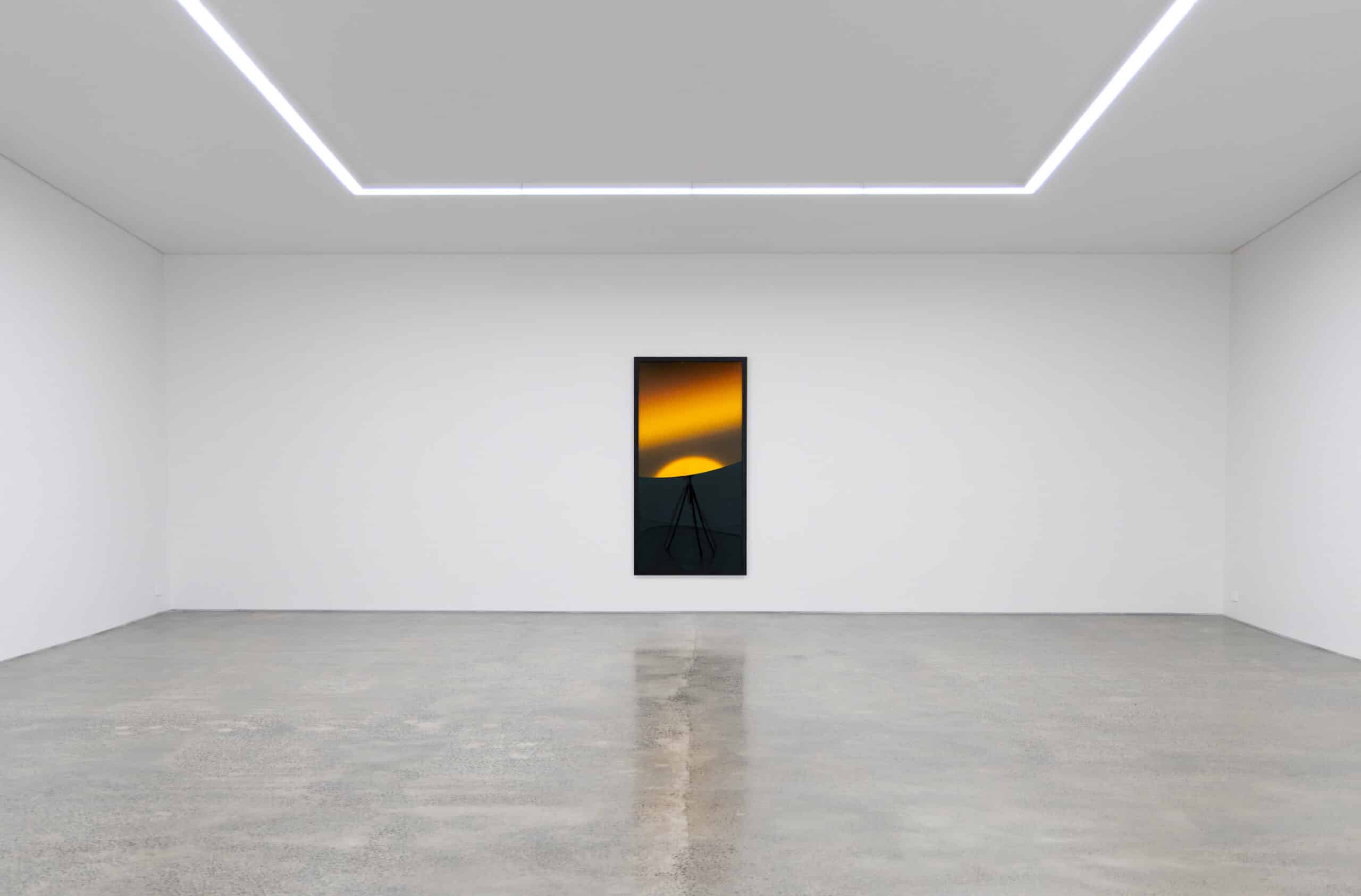

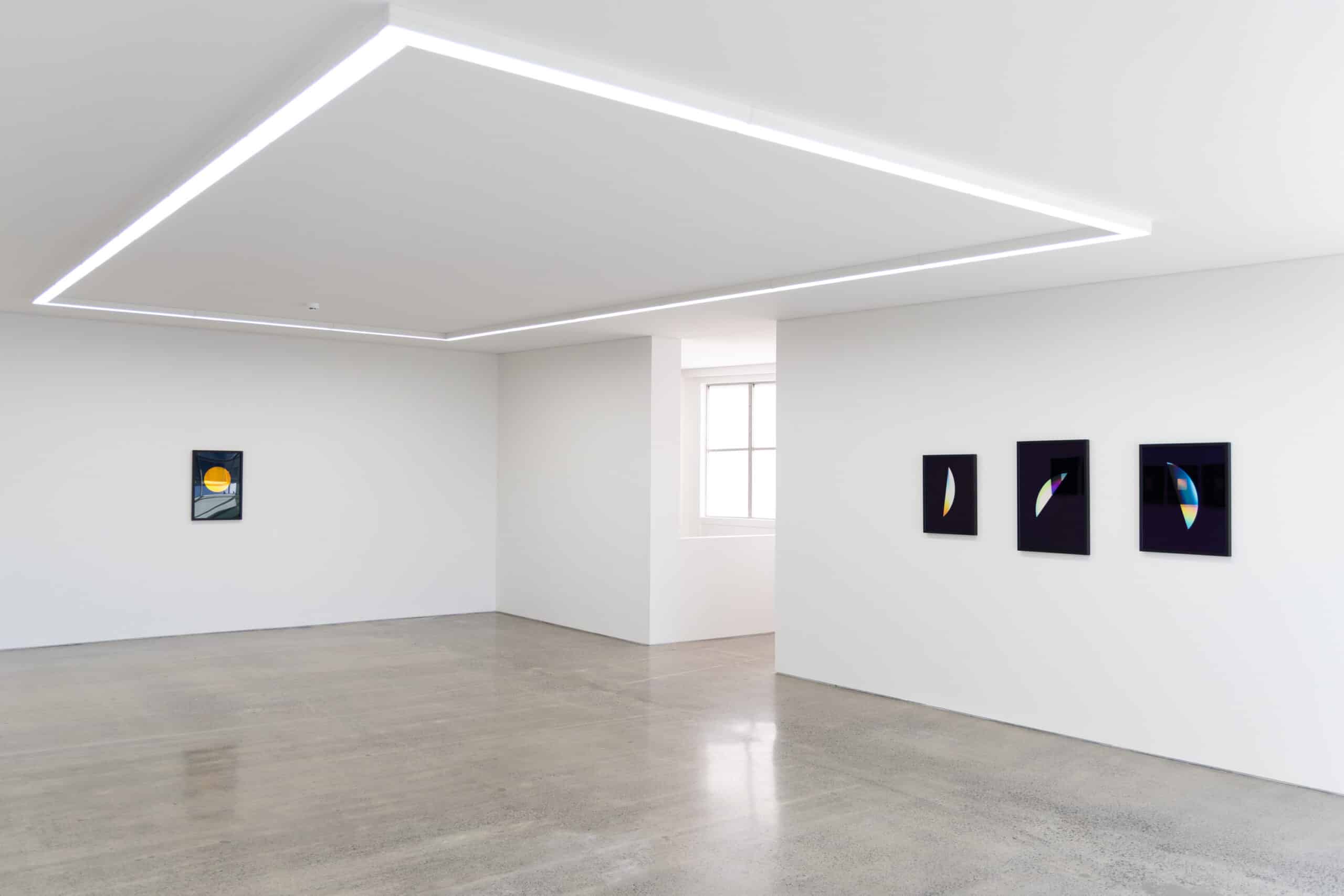
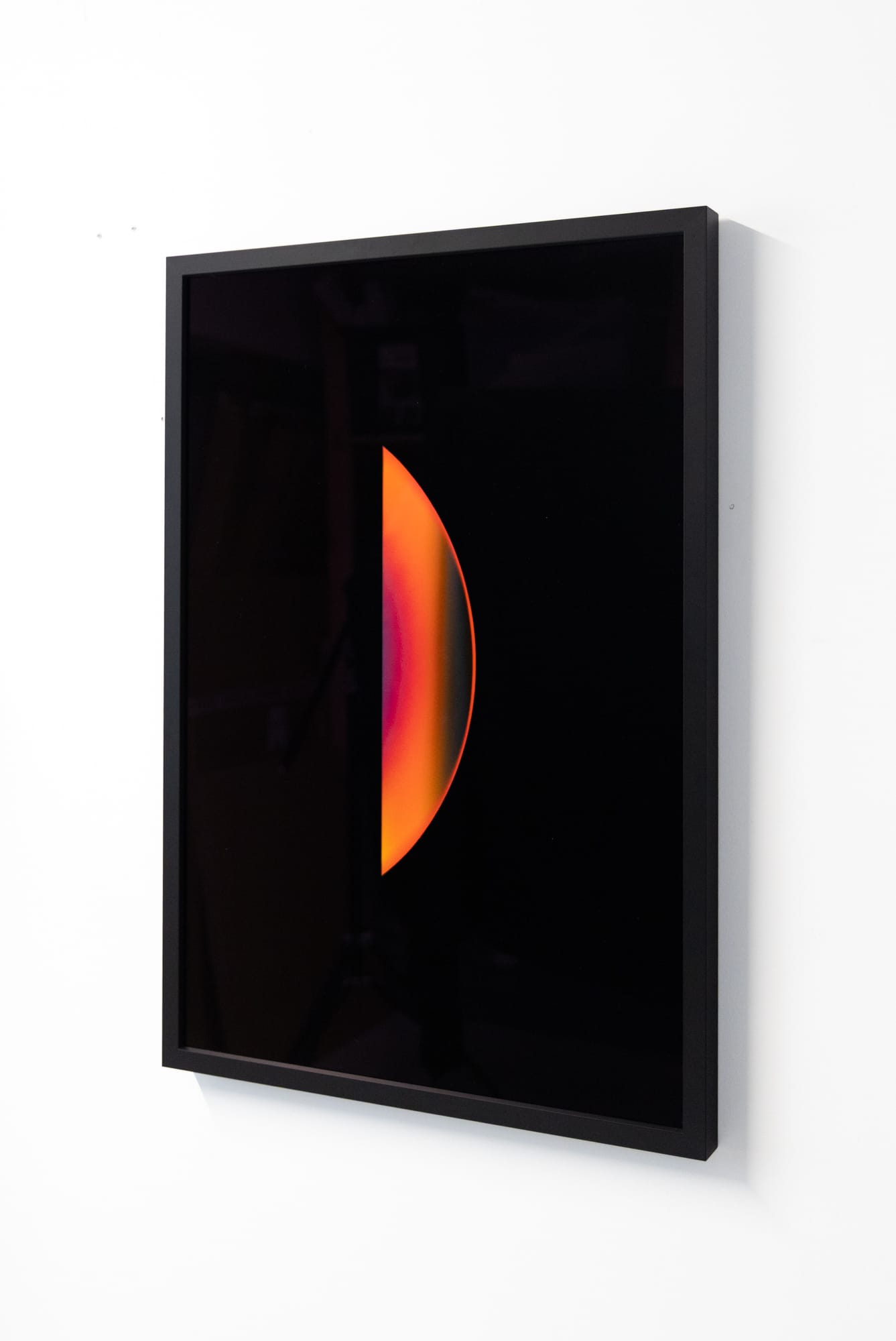
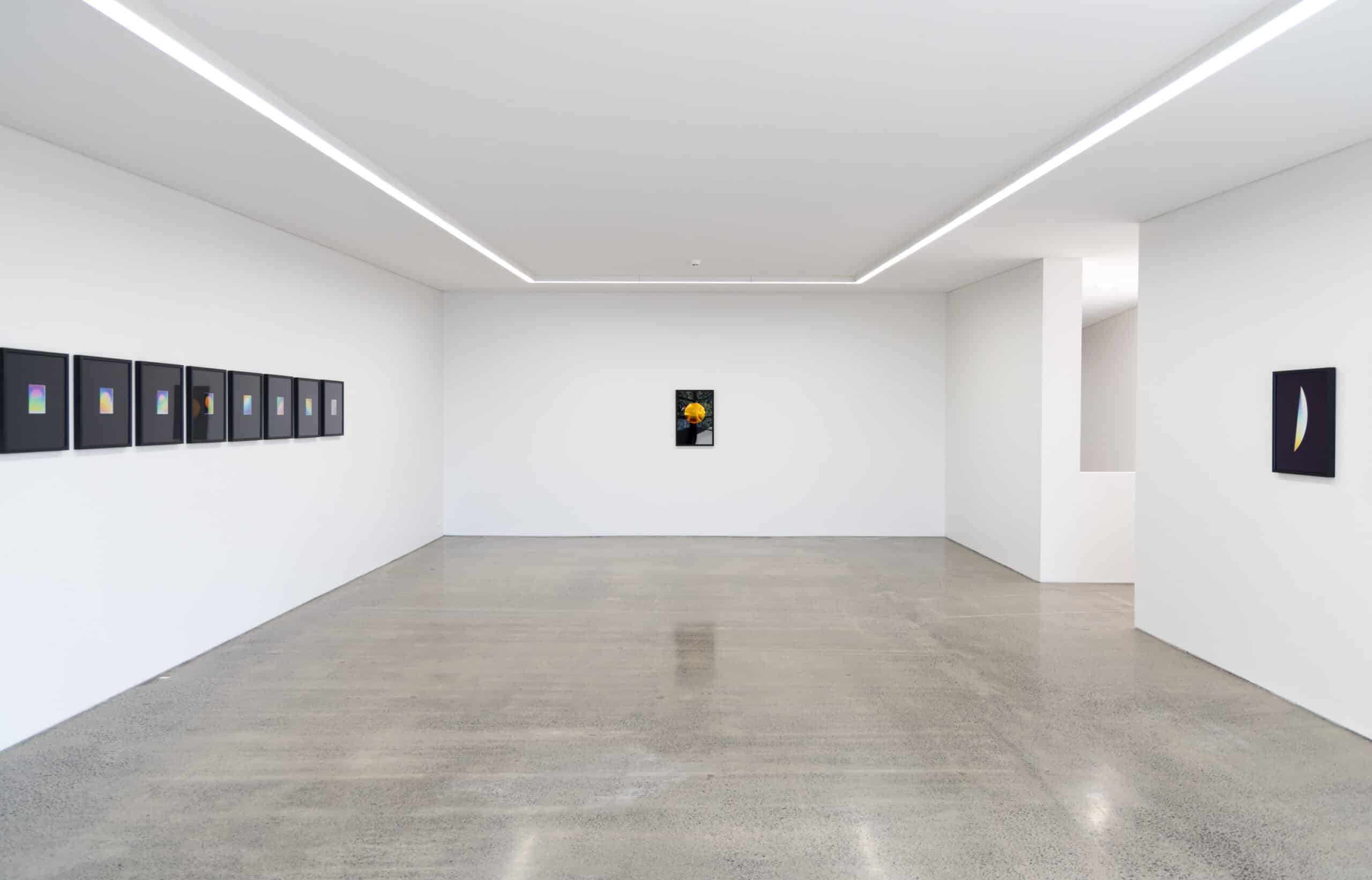
For Tomorrow’s Sun, Andrew Beck harnesses the enduring motif of the celestial body with unwavering formal precision. Contemplating the sun’s generative appeal as cultural archetype, Beck’s latest work considers the sun’s inherent relationship to visual perception and image-making.
Operating from an interest in the deconstruction of photographic processes, Beck strips the medium of technical apparatus or digital intervention. Each work carefully engineers light’s elusive qualities; from its initial capture on photosensitive paper through to a calculated mediation of light waves. Through Beck’s careful study of optical dynamics, the image-objects of his practice evoke a sense of hyper-reality, of hijacking physical laws or principles.
These manoeuvres attract and confound. Iridescent surfaces shift in relation to the viewer’s position, particularly in the Gateway works: a series of untethered, radiant orbs that oscillate between an image and an entrance. By layering titanium-coated glass over luminous spheres, a scattering of light known as structural colouration is achieved – a rare phenomenon usually observed in organic materials, from opalescent butterfly wings to the shells of pearl oysters. The result is one in which light’s modulation alone—as opposed to pigment—gives rise to shifting, jewel-toned colour values. The perceiver is met with deep, illusionistic space or obdurate surface image from one moment to the next. Through formal innovations, the artist devises eerily familiar worlds that subvert the usual rules of engagement.
Tomorrow’s Sun’s most enigmatic diptych evades simple reading, despite its allusions to the familiar. Titled ‘Recursive Dawn’ and ‘Recursive Dusk’ respectively, each “sun” is aglow with an intense warmth, partly submerged behind a pitch-black foreground – one curved like a horizon line viewed across great oceanic distance. Though the trajectory of these orbs is unclear, the blurred gradations between stratosphere and upper atmosphere are recognisable in the background – we appear to be looking at a rising or setting sun. Distancing his work further from the traditionally documentary role of photography, this dual sunrise/sunset nonetheless resists being caught in a temporal bind; neither definitively rising nor setting, the signs are suspended in perpetuity, two ends of a polarity incapable of being collapsed into a single reading.
Nina Dyer