Clinton Watkins | nothing_everything
08.08 - 19.09
Auckland
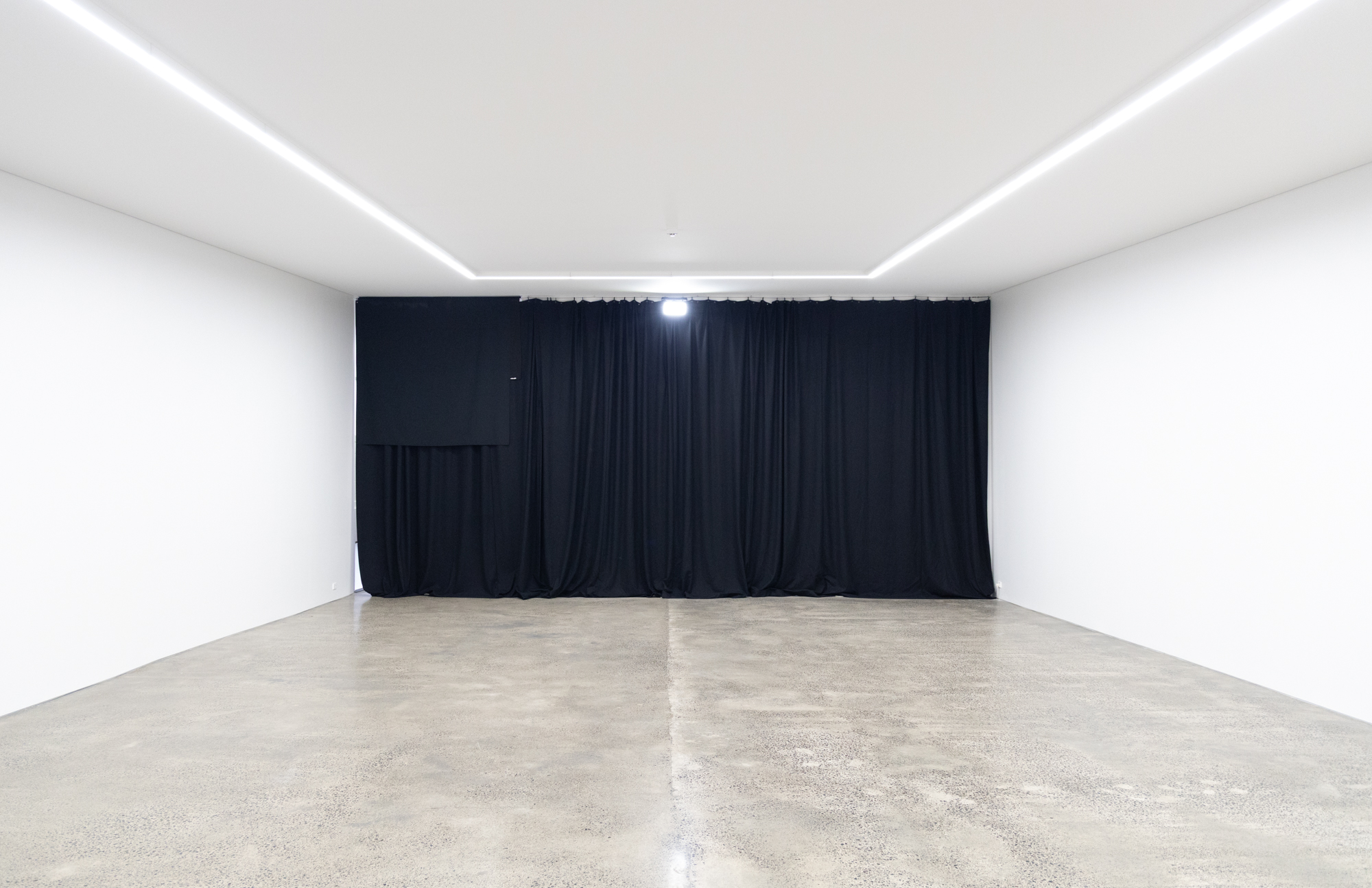
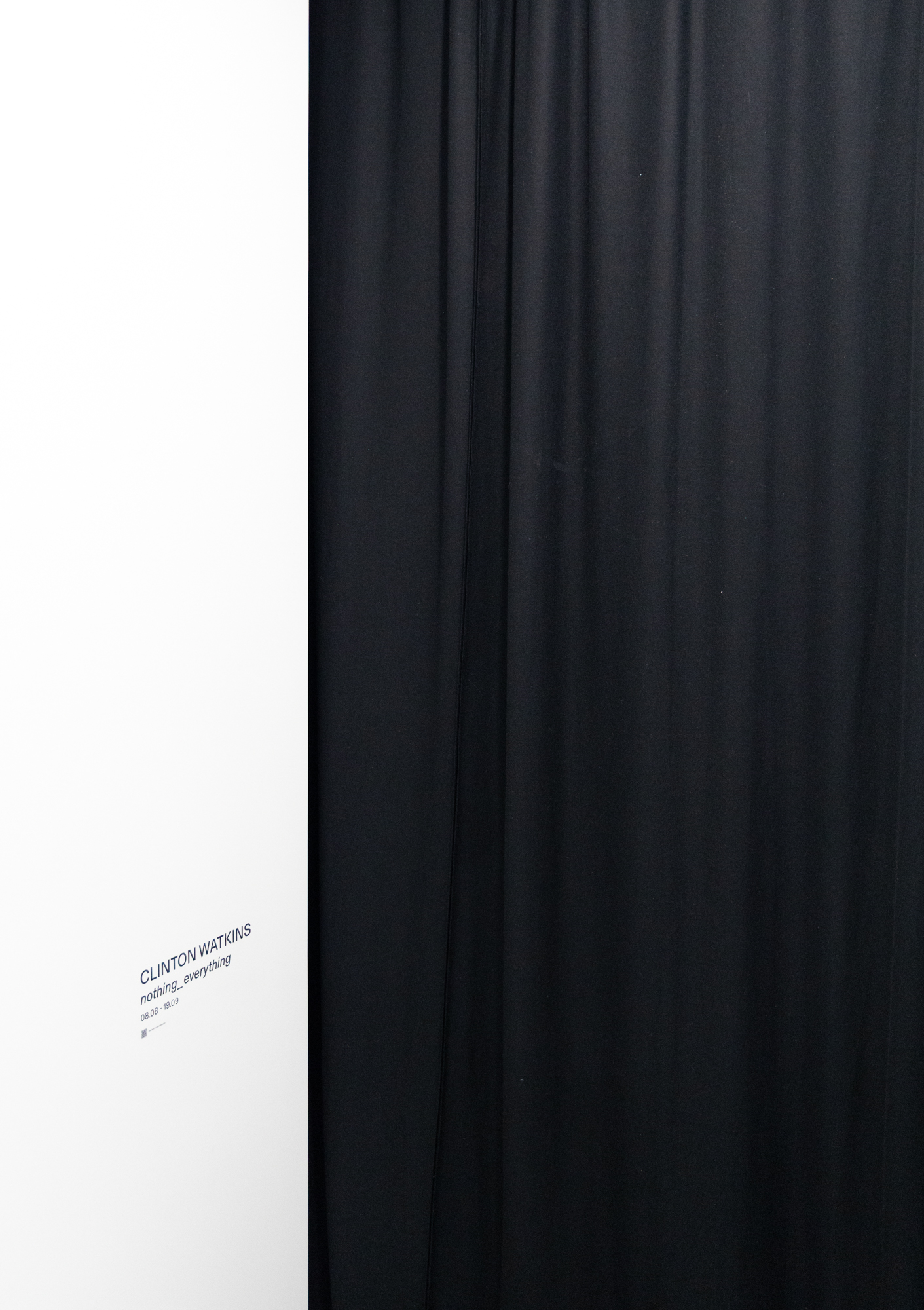
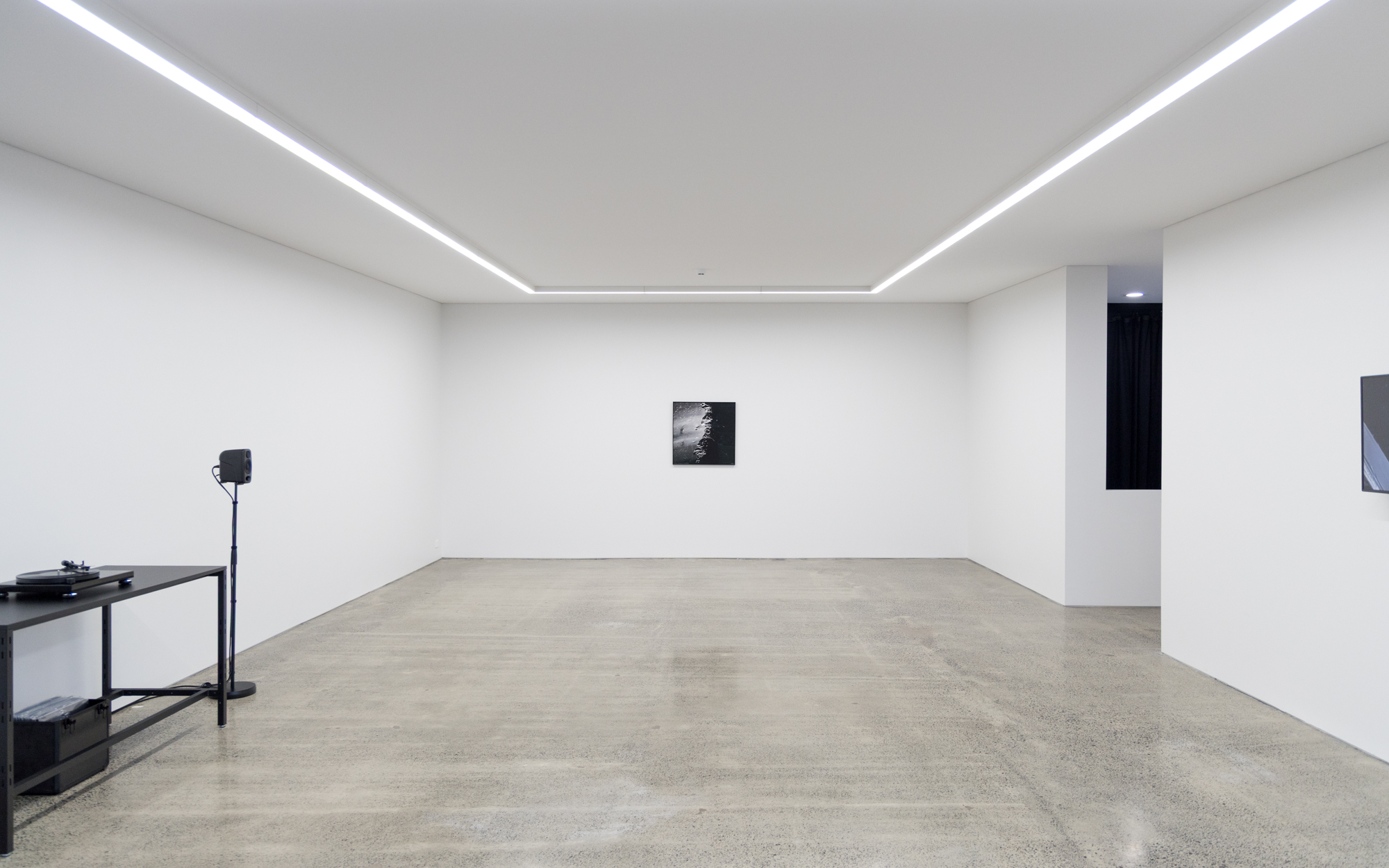

What is the opposite of the art gallery’s appealing white box? Perhaps it is the disquieting, Saturnian and nihilistic black cube. Clinton Watkin’s new installation at Starkwhite Auckland interrogates the culture and aesthetic of the solicitous and “pleasant” gallery experience, choosing instead to cast it aside for a memorable exercise in alienation and, perhaps, transcendence.
Watkins is a sound and video artist whose work investigates how combinations of sonic and visual information shape perception and affect. His installations use colour, duration, scale, and custombuilt audiovisual hardware to construct immersive environments in which repetition, distortion, and minimalist form heighten sensory awareness. Watkins’ practice spans video projection, multimonitor configurations, and advanced electronic systems, producing works that explore the structures and phenomena of sound and image. He has exhibited widely across New Zealand and internationally, including recent presentations at the Rockbund Art Museum in Shanghai and the Centre Pompidou/IRCAM in Paris.
Alongside his installation practice, Watkins is an active experimental musician, performing both solo and collaboratively as a member of the minimal electronic improvisation sextet Plains and half of the noise duo 1000. His performance history includes work with artist Santiago Sierra and appearances alongside freejazz saxophonist Peter Brötzmann. Watkins has released numerous recordings on local and international labels such as Circle, 20 City, Claudia, Mystery Sea, CMR, Absurd, and Scarcelight. He holds a Doctorate in Fine Arts and is an Associate Professor at Auckland University of Technology, where he teaches experimental timebased media and continues to develop new sound compositions, video installations, and documentary collaborations.
The gallery space is in darkness, revealed as the original white space only by the flash of a strobe light that comes on once a second—just often enough to be jarring, and reminiscent of Martin Creed’s Turner Prize-winning Work No. 227: The lights going on and off. In antiquity, from the Eleusinian Mysteries to the cult of Mithras and the Oracle of Trophonius, this kind of sensory deprivation and derangement was understood as essential to communing with the gods. The salient part of the experience, however, is the sound. Watkins’ sound design is influenced by extreme subgenres of metal—raw black metal and grind—and by abrasive, lo-fi production as an aesthetic stance: a reaction against overly earnest or safe contemporary art, and an expression of personal night-terror imagery. In that respect, he belongs to a lineage that includes Kafka, Goya, Thomas Ligotti, and František Kupka.
Watkins describes the sound component of the work as “blackened noise”: material composed during lockdown from 2020 onward, characterised by very short, rapidly colliding pieces intended to reflect compressed modern attention spans, as well as psychological themes of alienation and nihilism. This can be understood through the lens of black metal’s pursuit of intensity, and its rupture from a mundane contemporary world deprived of mystery, ritual, and the transcendental. Disenchantment is the anthropological and sociological idea (rooted in Max Weber) that modernity strips the world of sacred meaning, replacing myth, ritual, and mystery with rationalization, bureaucracy, and scientific explanation. Reenchantment describes the countermovement in which individuals or societies generate new forms of meaning, spirituality, ritual, or myth by creating fresh symbolic worlds that restore a sense of wonder, mystery, or transcendence within modern life.
In their 2009 manifesto “Transcendental Black Metal: A Vision of Apocalyptic Humanism,” American black metal composer and philosopher Haela Ravenna Hunt-Hendrix describes the “Haptic Void” as a “hypothetical total or maximal level of intensity”: a horizon toward which extreme metal strains, even as it discovers that plenitude and emptiness converge. Watkins’ installations operate in this same territory of sensory extremity. Low-frequency pressure, saturated colour, and durational drift push perception toward its thresholds, revealing the point where sound becomes force and image becomes atmosphere. His use of repetition, distortion, and minimalist reduction echoes the manifesto’s account of hypertrophy—“growth is life, stasis is decay”—producing works that expand and accumulate, exerting pressure against the stasis and paralysis of modernity.
Hunt-Hendrix’s central technical concept, the “Burst Beat,” defined as a blast beat that “ebbs, flows, expands and contracts, breathes,” offers a powerful analogue for Watkins’ modulation of sonic phenomena. Watkins’ installations breathe and pulse, embodying the manifesto’s idea of rupture at the moment of transcendence. His durational minimalism inhabits what Hunt-Hendrix calls the “penultimate moment”: the perpetual “almost” or “not yet” in which meaning resides. His commitment to raw, unmediated sensory experience also aligns with the manifesto’s definition of courage as “flying towards the horizon with no guarantee of a place to land.” Read through this framework, Watkins’ practice becomes a deliberately neural art of intensity and transformation, where sound and image operate as living forces rather than merely representing the world.
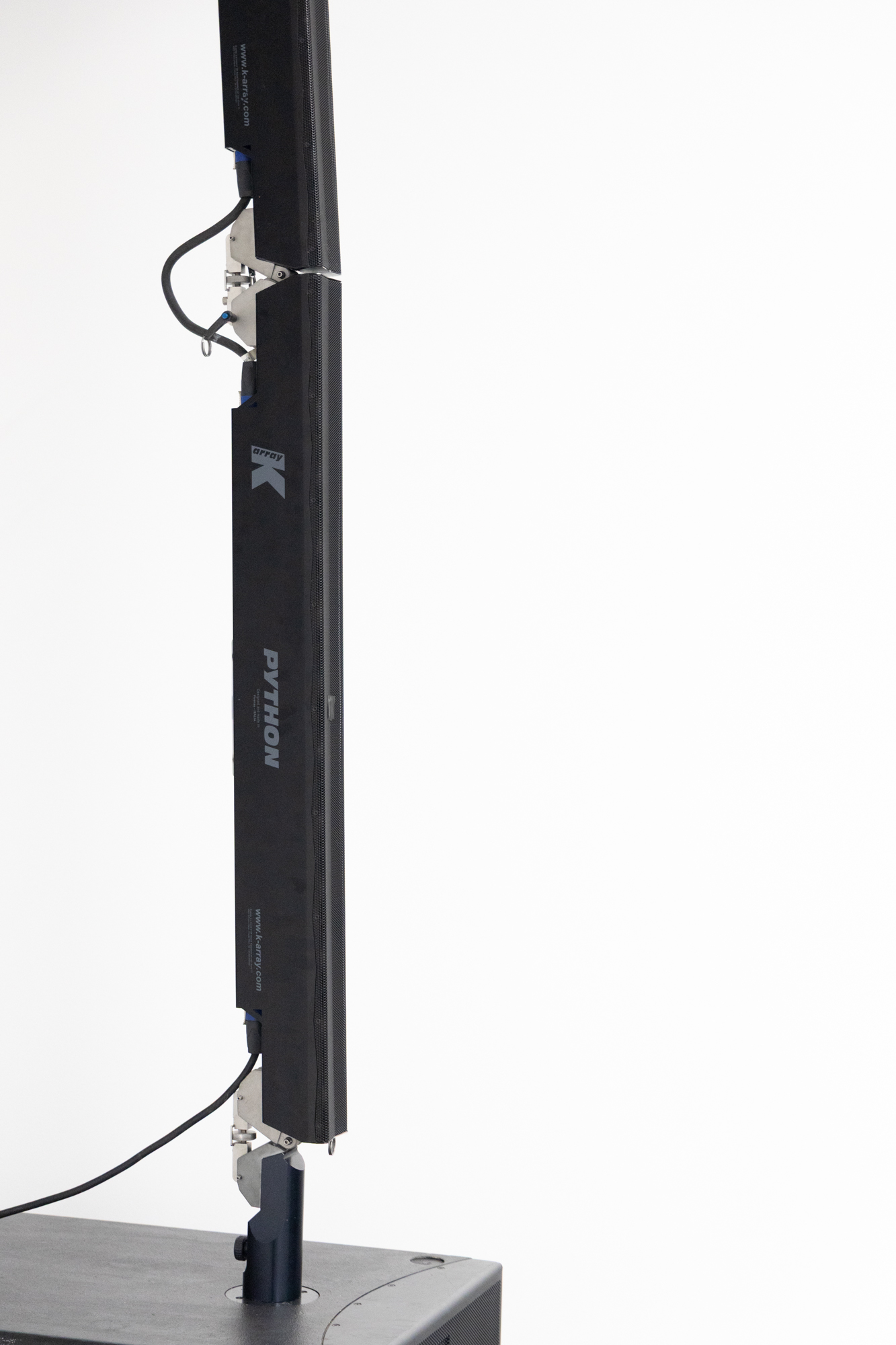
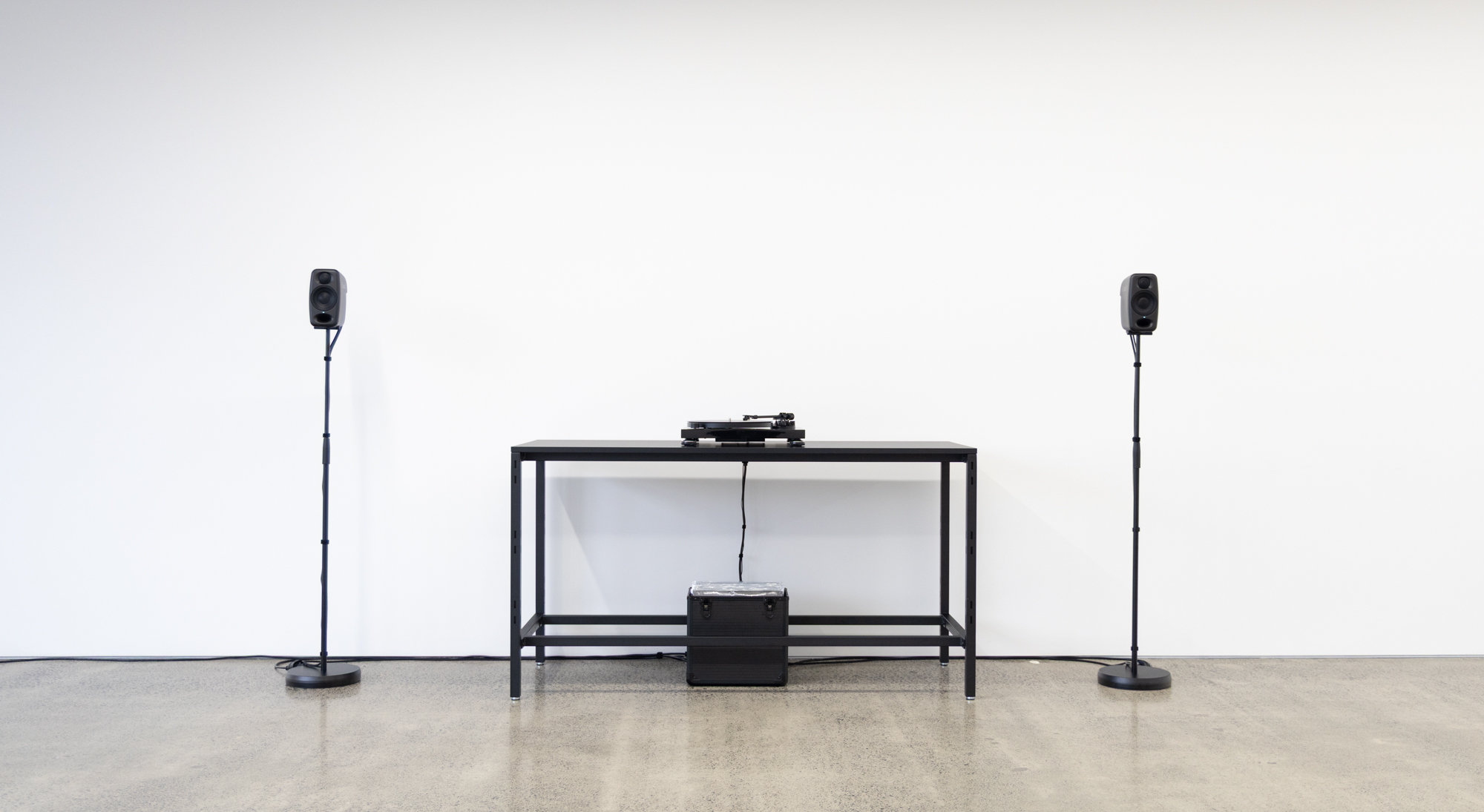
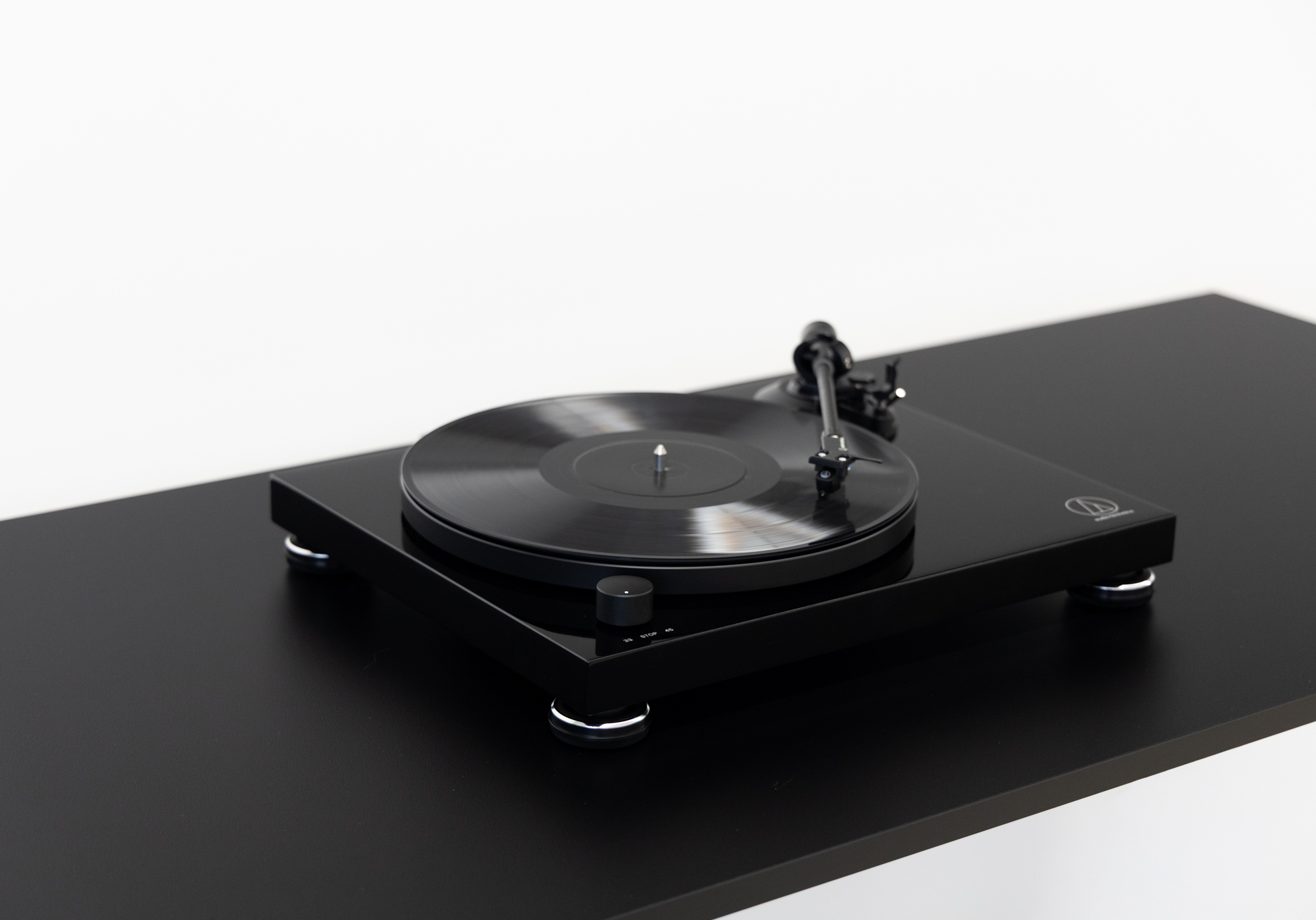
The sound comes from a 12-inch vinyl record on a minimalist turntable, both slick and black, like Darth Vader’s helmet. By virtue of the transformative powers of the gallery space, the turntable becomes a Duchampian readymade. The record is produced by the artist and, though it can obviously be played by anyone on any turntable, here forms a single object with this specific turntable, in this specific place and time. The absence of other physical points of reference in the space gives the turntable an almost ritual significance and tremendous emphasis.
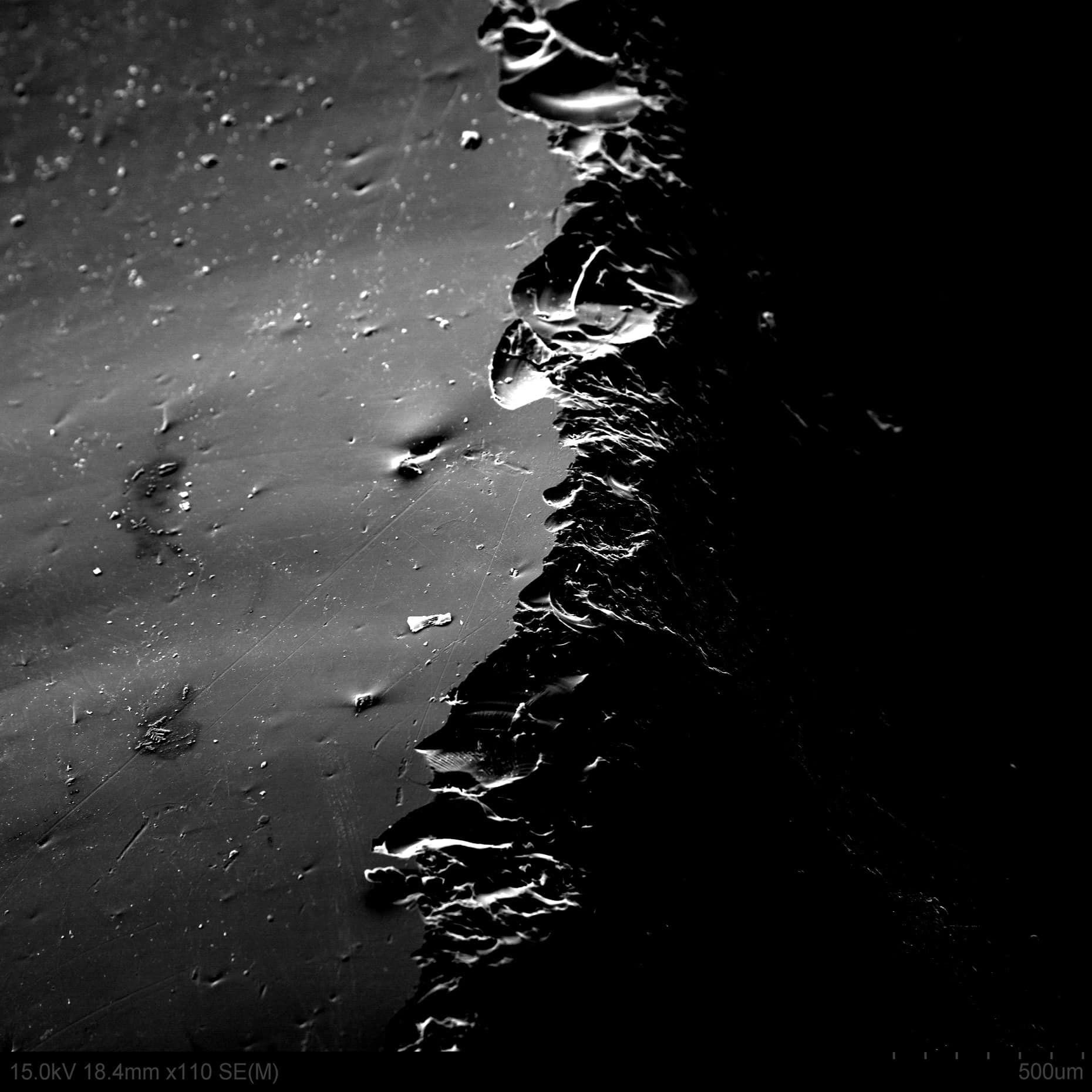
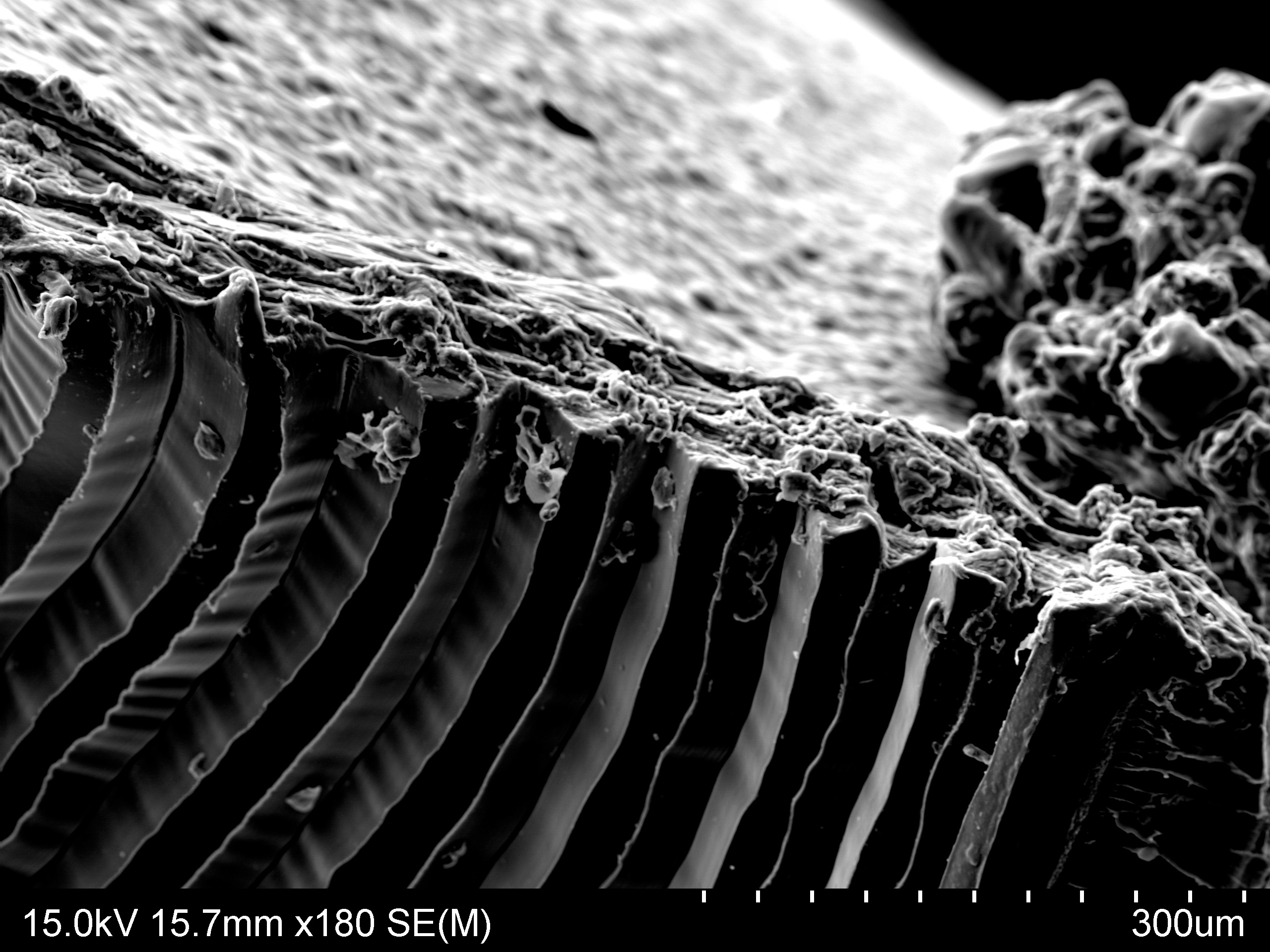
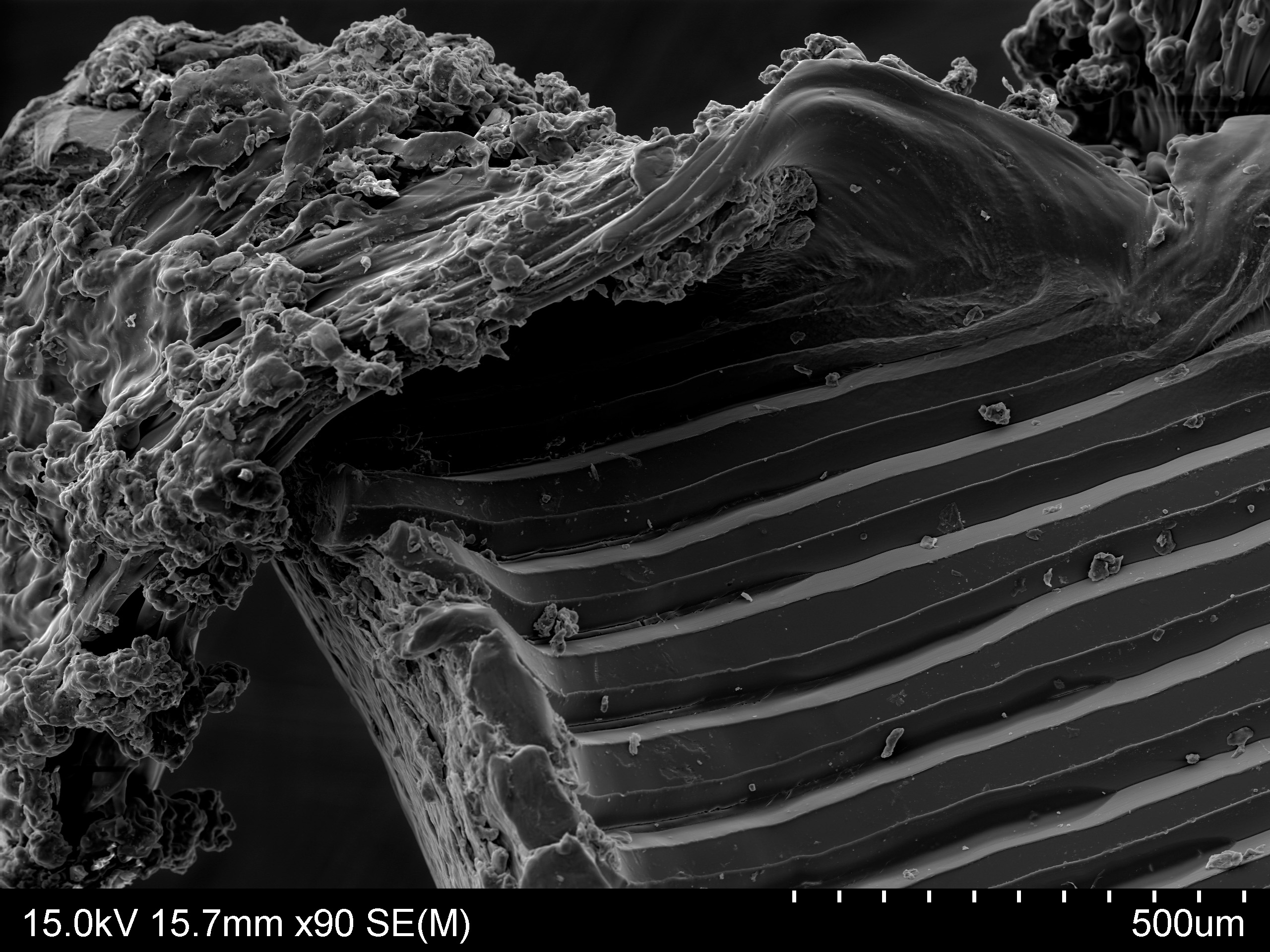
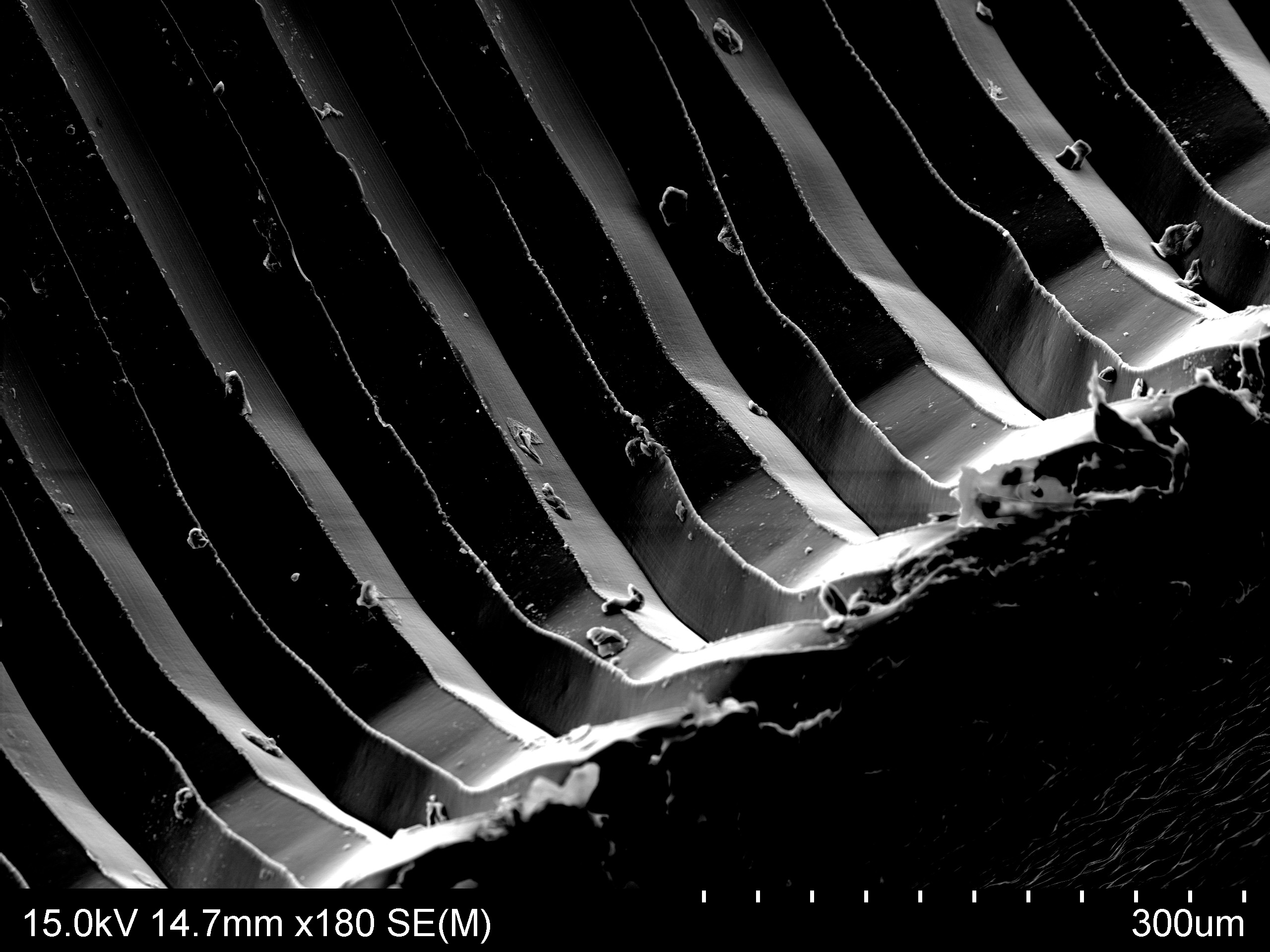
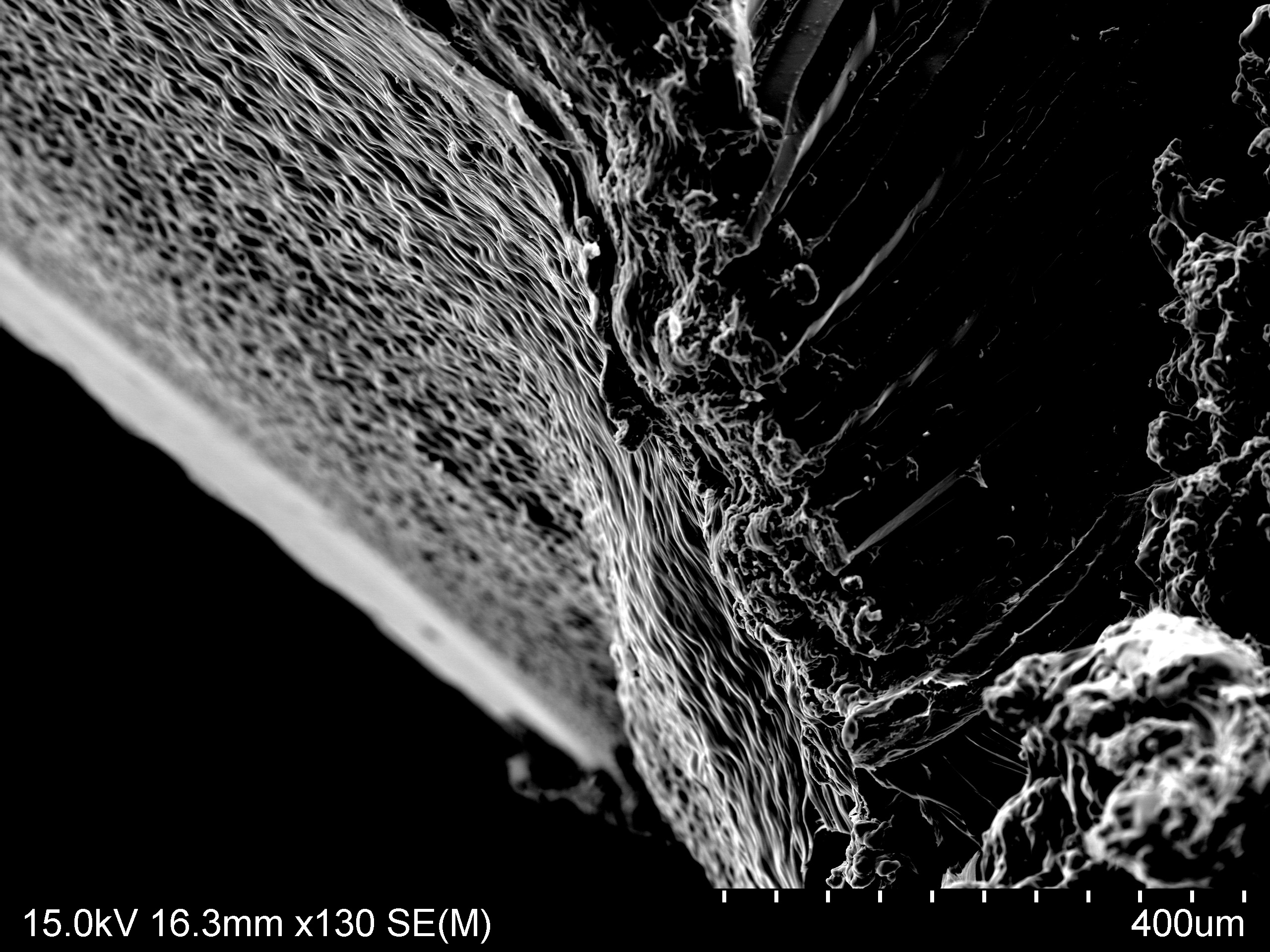
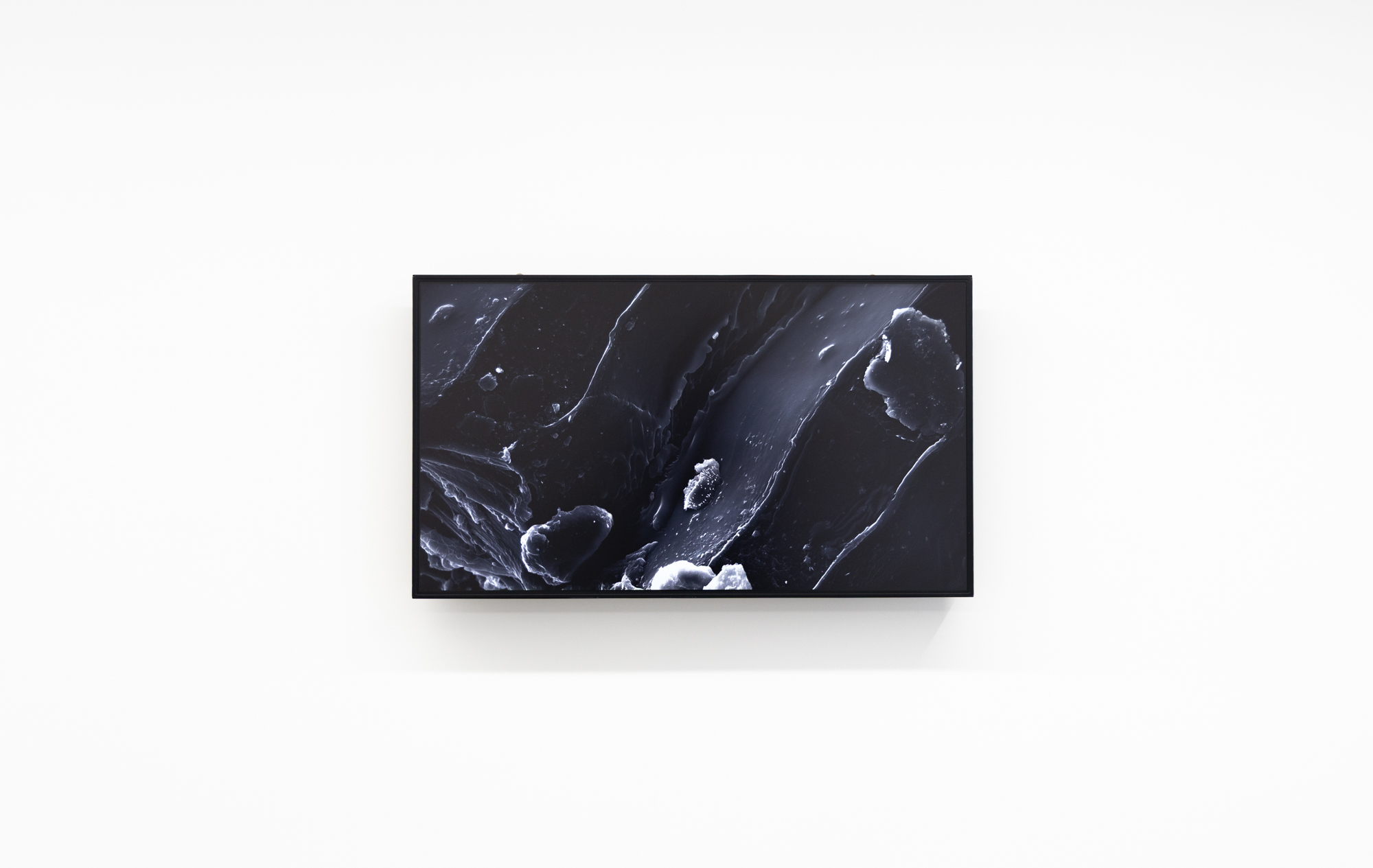
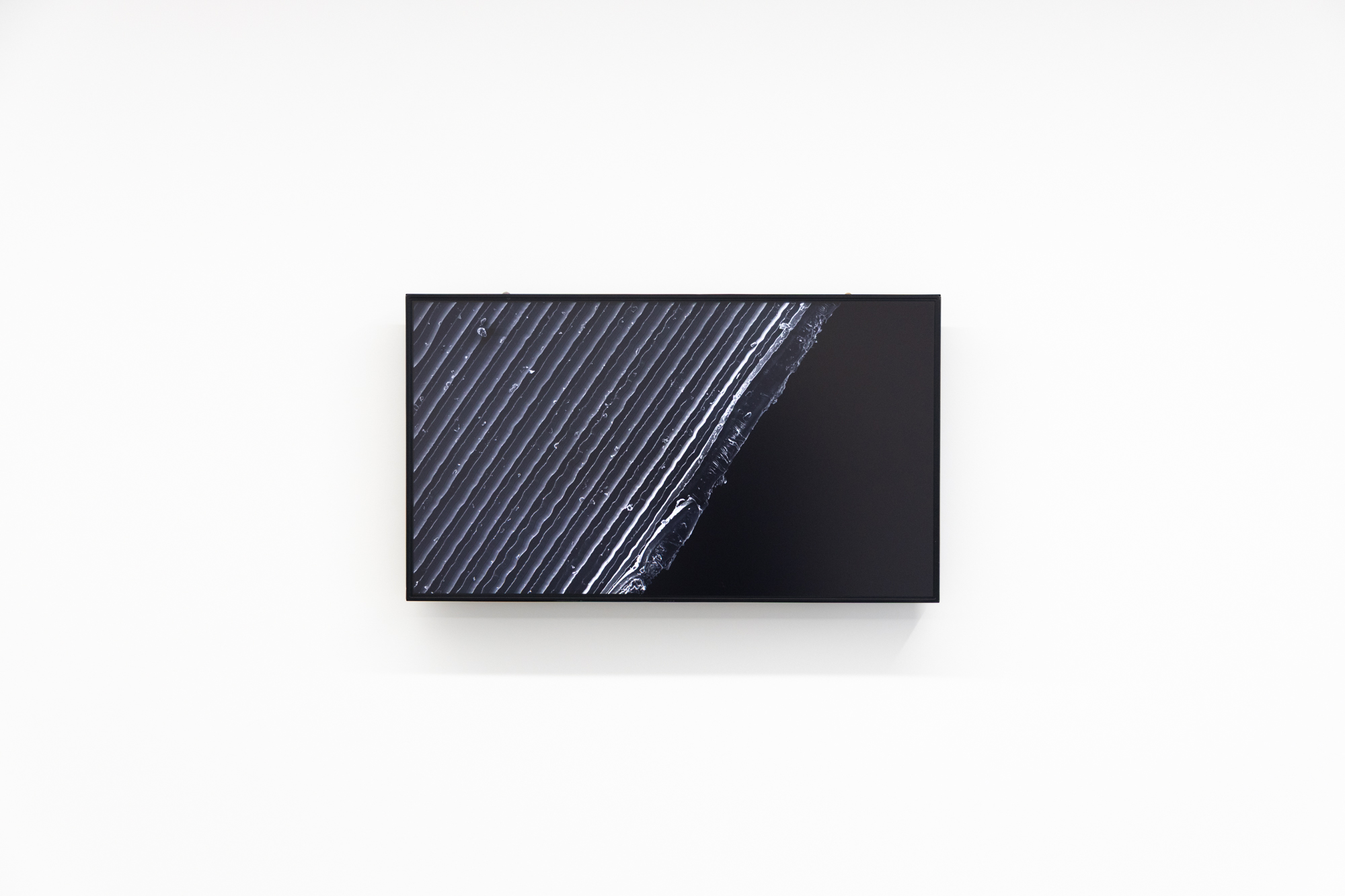
The other physical component of the installation, located in the upstairs gallery, is a single framed black-and-white photographic print, 750 mm by 750 mm, of what at first looks like one of the images NASA’s New Horizons probe sent back from the surface of Pluto in 2015. In fact, it is an electron microscope image of the groove of the record: the jagged canyon that stores the sound, the abyss from which it emerges. It becomes an icon of transcendental abstraction, attempting to give visual form to what cannot be described.
Much occult theory is concerned with forces that operate beneath the threshold of ordinary perception: vibrations, resonances, correspondences, and the unstable border between signal and noise. Watkins’ installations work precisely in this territory. His use of sustained frequencies, colour fields, and minimalist repetition draws attention to phenomena that are normally unnoticed, creating environments in which sound and image behave like hidden systems gradually revealing their internal logic. The immersive scale of his work encourages viewers to experience these structures physically—as pressure or pulse—echoing esoteric traditions that treat sensory immersion as a mode of knowledge.
Occult frameworks also emphasise ritual, duration, and the slow accumulation of affect. Watkins’ long-form sound pieces and video installations share this temporal sensibility: they build intensity through iterative processes, subtle distortions, and the disciplined manipulation of sonic and visual material. In doing so, they create states of heightened attention that resemble the altered perceptual modes associated with ritual practice. His experimental music, particularly in noise-based or improvisational contexts, extends this further, treating distortion, interference, glitch, and repetition as generative rather than disruptive. Read through an occult lens, Watkins’ work becomes a study of how hidden forces, liminal thresholds, and the materiality of vibration shape human experience.